


What Does 2026 Have In Retailer For The eLearning Business?
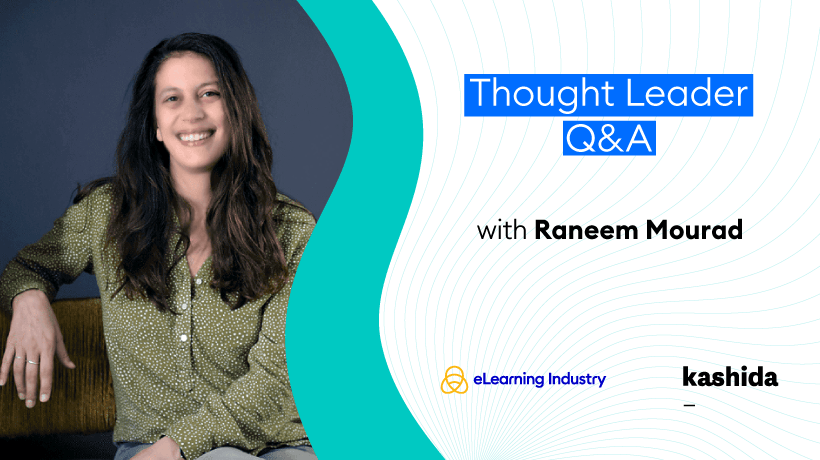
With over a decade of expertise in advertising and marketing and promoting, Raneem Mourad transitioned to the EdTech sector in 2013 and have become the Managing Companion at Kashida in 2016. Kashida designs and produces bespoke, impactful eLearning content material throughout platforms to satisfy the distinctive wants of its shoppers. Because the Companion & Director of Development at Kashida, Raneem leads a staff of proficient designers, builders, and Studying Expertise Designers, in addition to oversees the enterprise improvement, market analysis, and shopper relations elements of the corporate. At present, she speaks with us about what 2026 will convey for EdTech and eLearning primarily based on her work with international organizations and customized studying design expertise.
This previous yr has introduced its fair proportion of improvements within the eLearning subject. What ought to L&D leaders be enthusiastic about in 2026?
A lot to be enthusiastic about. However what I believe L&D leaders needs to be most enthusiastic about is the truth that we now have extra flexibility than ever in how studying is designed and delivered. The query is now not what expertise we must always use, however moderately what sort of expertise do learners really want? That shift in mindset opens the door to way more significant, context-aware studying—whether or not via digital packages, blended codecs, or extra immersive experiences.
What excites me most about 2026 is not a single expertise or pattern; it is the rising maturity of the eLearning subject itself. We’re lastly transferring away from chasing instruments for their very own sake and towards extra considerate conversations about goal, influence, and relevance.
I am additionally seeing a a lot stronger give attention to adaptability. Organizations are more and more conscious that studying cannot be static anymore. It must evolve alongside individuals, roles, and priorities. In our work, this has meant designing studying experiences that may develop over time, moderately than being locked right into a single format or platform.
General, 2026 appears like a second the place L&D can additional embrace its strategic position: much less about content material manufacturing, and extra about enabling actual functionality constructing.
Based mostly in your years of expertise in customized studying improvement, how do you suppose expertise, design, and technique are evolving?
One of the necessary modifications I’ve noticed is that expertise, design, and technique are now not being handled as separate conversations. The best studying initiatives as we speak are those the place these three components are deliberately aligned from the beginning.
Design, specifically, has taken on a way more strategic position. Studying expertise design is not nearly structuring content material or including interactivity—it is about understanding learners, organizational realities, and desired behaviors, after which making deliberate selections about how expertise can assist these targets.
In lots of the tasks we work on, expertise choices come after deep design conversations. That sequencing issues. It permits expertise to behave as an enabler moderately than a constraint. As instruments proceed to evolve, this method additionally offers organizations extra resilience—they are not tied to a single answer, however to a transparent design logic that may adapt over time.
Finally, this evolution exhibits that robust studying outcomes do not come from innovation alone. They arrive from considerate integration—when technique units course, design supplies construction, and expertise helps execution.
How can organizations put together for a quickly shifting digital studying panorama? Why is it so important for them to give attention to human-centered design?
The best way I see it, one of the best ways organizations can put together for change is by grounding their studying efforts in a deep understanding of individuals. Applied sciences will proceed to shift, however learners—their motivations, pressures, and constraints—stay crucial fixed.
Human-centered design helps organizations construct studying that is resilient. When experiences are designed round how individuals truly work and be taught, they’ll evolve with out dropping relevance. I’ve seen many organizations make investments closely in platforms, solely to appreciate later that the educational would not translate into actual habits change. That normally occurs when design choices aren’t rooted in learner realities.
A human-centered method forces necessary questions early on: What drawback are we fixing? What does success seem like for learners? What limitations may they face? These questions form every little thing that follows, together with how expertise is used.
Making ready for a shifting panorama is not about predicting the long run completely. It is about creating studying ecosystems which can be versatile, empathetic, and aligned with actual organizational targets. If you design from the human perspective, adapting to no matter comes subsequent turns into rather more manageable.
Are you able to inform us a bit extra about Kashida’s design methodology and the way it helps you (and your shoppers) navigate the shifts in expertise?
We made a strategic resolution over ten years in the past that our design methodology would all the time begin with individuals, not platforms. Each mission begins by understanding learners, context, and the form of change the educational is supposed to assist. Solely then will we make choices about codecs, instruments, or applied sciences.
It hasn’t all the time been simple to persuade shoppers to start out with a design technique first. Many initially wish to know what the ultimate output will seem like earlier than committing. However as soon as they undergo our LXD course of and expertise it firsthand, belief builds—as a result of the outcomes are extra significant, related, and impactful for each learners and the group.
This human-centered, tech-agnostic method permits us and our shoppers to navigate technological shifts with confidence. For instance, in packages like NetHope’s Ladies Leaders initiative, the place learners come from extremely numerous cultural {and professional} contexts, beginning with design technique allowed the educational expertise to stay coherent and related whilst supply codecs developed.
Throughout very various kinds of tasks, we have seen how this system creates continuity, even when expertise modifications midstream. As a result of the design logic is evident, new instruments will be built-in thoughtfully moderately than disruptively. That is what in the end makes studying really feel future-ready.
What position do you imagine AI performs in the way forward for customized studying design, and the place do you suppose the AI-human collaboration is heading?
There are lots of methods we’re already seeing AI play a task in customized studying. From a design perspective, I see AI as a robust assist—not a alternative. Its actual worth lies in the way it enhances human experience, notably by enhancing effectivity and opening up new potentialities for personalization and scale.
We’re already utilizing AI to streamline components of the event course of, giving our studying designers more room to give attention to what actually requires human judgment: understanding context, navigating complexity, and designing experiences that drive significant change. For us, AI elevates the position of the educational designer moderately than diminishing it.
AI has additionally grow to be a robust device in manufacturing. It permits us to develop pilots rapidly—testing concepts, visuals, or narrative instructions early—so shoppers can align on technique via tangible examples in a extra cost- and time-efficient method. This has been particularly helpful in tasks coping with advanced or delicate subjects, comparable to our work on digital monetary literacy, the place iteration and readability are important.
Trying forward, I see AI-human collaboration transferring towards a extra intentional partnership. We outline the targets, values, and moral boundaries; AI helps exploration, adaptation, and responsiveness. The chance, in fact, is utilizing AI with out a robust design basis. With out that, it may stay superficial—or, worse, introduce cultural or contextual inaccuracies.
When grounded in human-centered design and clear studying goals, AI turns into a device that genuinely expands what’s potential, whereas holding individuals firmly on the heart of the educational expertise.
Wrapping Up
Thanks a lot to Raneem for sharing her insights on human-first studying design and navigating L&D challenges. If you would like to discover how Kashida can assist your 2026 studying technique, you may get in contact as we speak to e-book your 30-minute free session and focus on your particular wants.

