


by Felicia Mello, The Hechinger Report
December 23, 2025
OAKLAND — In 2020, California led the nation in outlawing transcript withholding, a debt assortment follow that typically saved low-income faculty college students from getting jobs or superior levels. 5 years later, 24 of the state’s 115 neighborhood schools nonetheless stated on their web sites that college students with unpaid balances may lose entry to their transcripts, based on a current UC Merced survey.
The communications failure has been deceptive, pupil advocates stated, though general, the state’s college students have benefited from the legislation.
It “raises questions on what precise institutional practices are at schools and the extent to which schools know the legislation and are totally compliant with the legislation,” stated Charlie Eaton, a UC Merced sociology professor who led the analysis crew that performed the survey in October.
California neighborhood schools say they’re following the legislation, which prohibits them from refusing to launch the grades of a pupil who owes cash to the college — wherever from a $25 library high quality to unpaid tuition. The misinformation on some faculty web sites is a clerical drawback that campuses have been requested to replace, the California Neighborhood Faculties chancellor’s workplace stated in an emailed assertion.
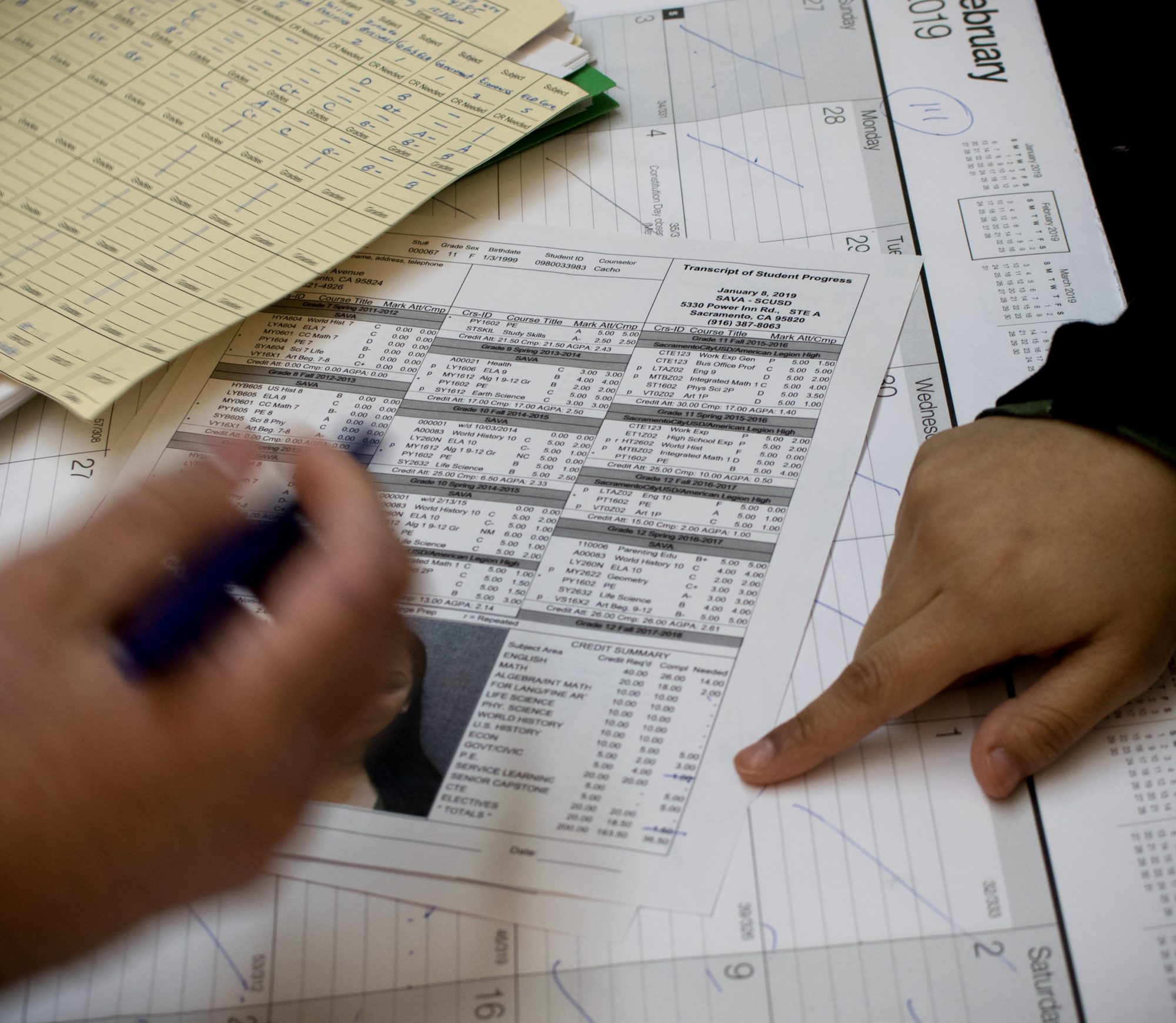
With out an official transcript, college students can’t show they’ve earned faculty credit to admissions workplaces elsewhere or to potential employers. Thousands and thousands of scholars nationwide have misplaced entry to their transcripts due to unpaid charges, based on estimates from the upper schooling consulting agency Ithaka S+R.
Scholar advocates argued that the follow made little cash for schools, whereas costing graduates alternatives that would assist them pay again their money owed.
California lawmakers agreed; in 2019, they handed laws that took impact on Jan. 1 2020, barring schools from utilizing transcript holds to gather money owed.
At the least 12 different states have adopted California’s lead, passing legal guidelines limiting or banning schools from withholding transcripts.
An identical however much less stringent federal rule accepted in the course of the Biden administration took impact final yr.
The brand new guidelines have raised consciousness about schools’ debt assortment practices and impressed some to search out methods to assist their college students keep away from falling behind on their funds within the first place or to repay what they owe — together with by forgiving their money owed.
Associated: Desirous about improvements in increased schooling? Subscribe to our free biweekly increased schooling e-newsletter.
Transcript withholding was by no means an particularly efficient assortment instrument, researchers have discovered. One 2018 examine estimated that Ohio’s public schools solely netted solely $127 for every transcript they withheld.
Faculties and universities, nevertheless, argued that withholding transcripts was one of many few methods they needed to stop college students from bouncing amongst establishments and leaving unpaid payments of their wake. Some use one other tactic, blocking them from registering for brand spanking new programs till payments are paid.
When schools select to withhold transcripts, the burden falls extra closely on low-income college students and college students of coloration, based on the American Affiliation of Collegiate Registrars and Admissions Officers. Usually these college students accrue money owed once they withdraw partway by a course, main the faculty to return a part of their monetary help to the federal authorities and cost the invoice to the scholar.
In states with legal guidelines limiting transcript withholding, many schools have begun speaking earlier and extra typically with college students about their money owed and providing versatile fee plans, stated Elizabeth Looker, a senior program supervisor at Ithaka S+R. Some have added monetary literacy coaching or required college students with unpaid payments to satisfy with counselors.
Eight public schools and universities in Ohio went additional, providing a deal to former college students with unpaid balances: Reenroll at any of the eight, and rise up to $5,000 of the excellent debt forgiven. Referred to as the Ohio School Comeback Compact, this system, which started in 2002 and concludes this fall, was open to former college students who had at the very least a 2.0 GPA and had been out of college a yr or extra.
This system was designed to offer a second probability to college students whose educations stalled due to occasions exterior their management, akin to dropping a job in the midst of the semester, stated Steve McKellips, vp for enrollment administration on the College of Akron.
Because the Ohio School Compact’s inception, 79 college students have returned to the college beneath this system, at a price to the state of $54,174 in debt forgiven. The college netted 5 instances that, or $271,924, in extra tuition, McKellips stated. Greater than 700 college students have used the compact to reenroll, based on Ithaka S+R, which helped coordinate this system and is learning the outcomes.
“I believe typically folks have this picture of someone strolling away from a tuition invoice as a result of they only don’t care,” McKellips stated. “However typically there’s only a boulder in the best way and someone wants to maneuver it. As soon as the boulder was moved they usually may transfer ahead, we’re discovering them persevering with fortunately alongside the best way they at all times meant to.”
Associated: Metropolis College of New York reverses its coverage on withholding transcripts over unpaid payments
One other California invoice, launched this yr, would have given college students a one-time go to register for programs, even when they owed a debt. It failed after the College of California, Cal State and plenty of personal schools and universities opposed it.
The College of California cited anticipated cuts to federal and state funding as one purpose it opposed the invoice. “UC believes that sustaining the power to carry registration is important for its skill to fairly safe unpaid pupil debt,” UC legislative director Jessica Duong wrote to lawmakers.
Cal State spokesperson Amy Bentley-Smith stated that Cal State needed a versatile method to debt assortment and that campuses had began eliminating registration holds for minor money owed akin to parking tickets and misplaced library books.
“College students are in a position to transfer ahead with their enrollment even with institutional money owed within the low a whole bunch to the low 1000’s of {dollars}, relying upon the college,” she stated.
Supporters of the failed invoice — which additionally would have barred schools from reporting a pupil’s institutional debt to credit score companies — stated curbing aggressive debt assortment doesn’t simply assist low-income college students; it accelerates the coaching of staff in industries essential to the state’s financial system.
“Colleges take into consideration these institutional money owed in a means that may be very penny-wise and pound-foolish, and it’s stopping folks from collaborating within the financial system,” stated Mike Pierce, govt director of Defend Debtors.
Associated: Faculties combat makes an attempt to cease them from withholding transcripts over unpaid payments
Annette Ayala of Simi Valley, hoping to develop into a registered nurse, took her for-profit faculty to court docket to pressure it to adjust to California’s debt assortment legislation.
She had earned her vocational nursing license from the college, the Skilled Medical Careers Institute, and needed to proceed her research to develop into a registered nurse. However the faculty refused to launch her transcript — citing a $7,500 debt that Ayala argued in court docket information she didn’t owe — and with out the transcript she couldn’t apply to different schools.
In her case, California’s Bureau for Non-public Postsecondary Schooling, which regulates for-profit schools beneath the state’s Division of Client Affairs, cited her former faculty for violating the state’s transcript-withholding legislation.
The school was fined $1,000 and ordered to replace its enrollment settlement. The college forgave the debt it stated Ayala owed. It’s the one case by which a college has been cited for withholding a transcript for the reason that bureau began monitoring compliance with the legislation extra intently two years in the past, stated Monica Vargas, a spokesperson for client affairs.
College officers had been unaware of the California legislation on the time Ayala sued, the college’s controller, Joshua Taylor, stated, and have since up to date their catalog to adjust to it.
Along with her vocational nursing license, Ayala has been working in residence well being care. Now that she has her transcript, she’s making use of for RN packages, and stated her wage would roughly double as soon as she has the brand new diploma, permitting her to save lots of for the long run and assist her son pay for faculty.
“You’ve obtained to offer folks the possibility to get by their program and pay their money owed as they’re working,” she stated. “You possibly can’t maintain them again from having the ability to make high greenback with their skills to pay again these loans.”
Contact editor Lawrie Mifflin at 212-678-4078 or mifflin@hechingerreport.org
This story about pupil debt and transcript withholding was produced by The Hechinger Report, a nonprofit, unbiased information group centered on inequality and innovation in schooling. Join our increased schooling e-newsletter. Hearken to ourincreased schooling podcast.
This <a goal=”_blank” href=”https://hechingerreport.org/5-years-after-california-banned-holding-college-students-transcripts-hostage-for-unpaid-debt-some-colleges-neglect-the-law/”>article</a> first appeared on <a goal=”_blank” href=”https://hechingerreport.org”>The Hechinger Report</a> and is republished right here beneath a <a goal=”_blank” href=”https://creativecommons.org/licenses/by-nc-nd/4.0/”>Inventive Commons Attribution-NonCommercial-NoDerivatives 4.0 Worldwide License</a>.<img src=”https://i0.wp.com/hechingerreport.org/wp-content/uploads/2018/06/cropped-favicon.jpg?match=150percent2C150&ssl=1″ type=”width:1em;top:1em;margin-left:10px;”>
<img id=”republication-tracker-tool-source” src=”https://hechingerreport.org/?republication-pixel=true&put up=114067&ga4=G-03KPHXDF3H” type=”width:1px;top:1px;”><script> PARSELY = { autotrack: false, onload: operate() { PARSELY.beacon.trackPageView({ url: “https://hechingerreport.org/5-years-after-california-banned-holding-college-students-transcripts-hostage-for-unpaid-debt-some-colleges-neglect-the-law/”, urlref: window.location.href }); } } </script> <script id=”parsely-cfg” src=”//cdn.parsely.com/keys/hechingerreport.org/p.js”></script>

